
The Workshop
The Workshop
Where investigation, traditional craftsmanship and practical experience come together
01
Workshop Craftsmanship
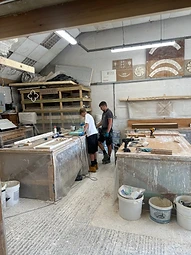
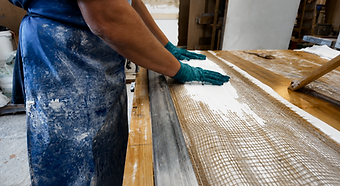
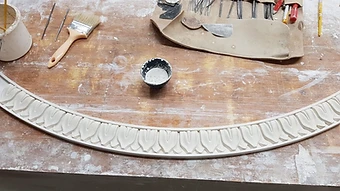
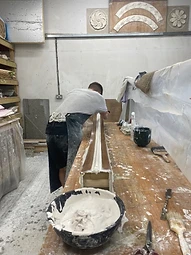
Every piece of decorative plaster work begins long before the first cast is made. Our workshop is where investigation, traditional craftsmanship and practical experience come together. It is a place where original profiles are studied, moulds are developed by hand and decorative plaster work is carefully produced using methods that have changed little over generations.
Whether supporting the conservation of a listed building or creating bespoke work for a new interior, every project follows the same principle: understand first, then create.


02
Running Moulds
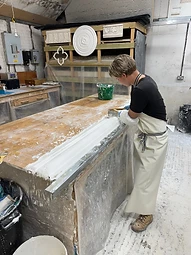
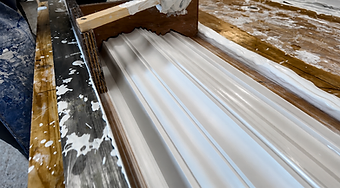
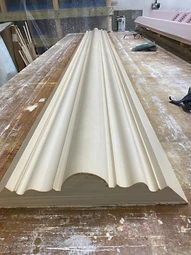
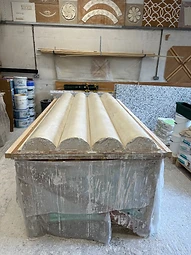
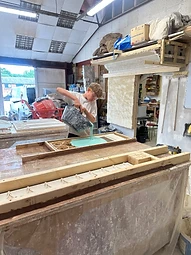
Running moulds remain at the heart of traditional decorative plaster work. From the simplest cove to deeply enriched cornices, each profile is carefully set out before the zinc profile is hand-cut, refined and run repeatedly to produce a true and consistent section.
This process forms the foundation for both new work and the accurate reproduction of historic mouldings, ensuring proportions and crispness are maintained throughout the project.


03
Mould Making
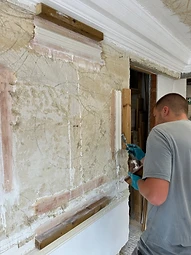
No two historic buildings are the same, and neither are the moulds required to conserve them. Where original work survives, squeeze moulds, silicone moulds or traditional waste moulds are produced to capture every detail.
Where ornament has been lost, surviving fragments, measured drawings and historical evidence are used to develop new moulds that remain faithful to the character of the original work. The intention is never simply to reproduce a shape, but to understand how it was first made so that its craftsmanship can be carried forward.


04
Fibrous Plasterwork & Casting
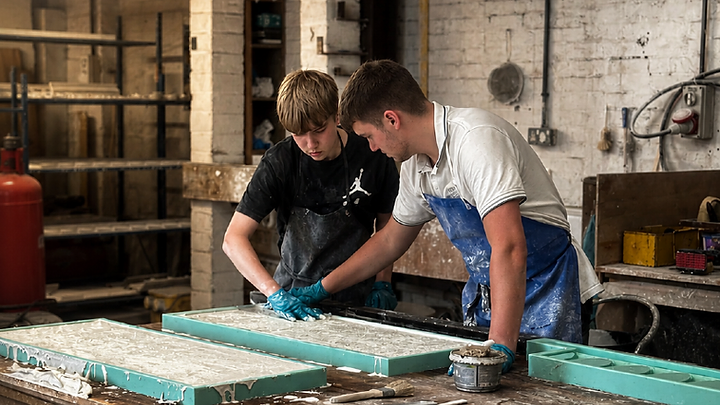
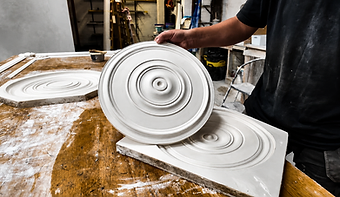
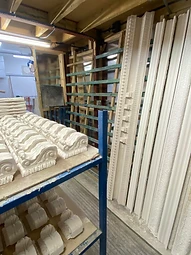
Traditional fibrous plaster work allows complex decorative elements to be produced with accuracy and consistency while remaining true to established methods. Each casting is reinforced using traditional techniques, carefully finished by hand and inspected before leaving the workshop.
From individual enrichments and ceiling roses to long runs of cornice and complete decorative schemes, every component is produced with the same attention to detail and respect for the craft.


05
Bespoke Decorative Plaster Work
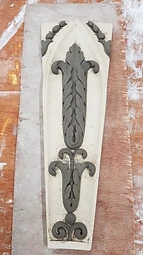
Alongside conservation work, the workshop provides the freedom to develop new decorative plaster work that complements both traditional and contemporary architecture. Original cornices, ceiling panels, enrichments and architectural features are designed, modelled and produced using traditional workshop methods.
This allows new work to possess the same depth, balance and craftsmanship found within historic interiors.


06
Passing on the Craft
The workshop is also where knowledge is shared. Traditional decorative plaster work is learned through observation, repetition and experience. Apprentices work alongside experienced craftspeople, developing an understanding of materials, tools and techniques while appreciating the responsibility that comes with working on historic buildings.
This continuity of knowledge helps ensure that traditional skills are not simply preserved within the buildings we work on, but also within the people who will care for them in the future. From the first running mould to the final cast, everything produced within our workshop reflects the same approach that guides every project undertaken by Classic Plasterwork: understanding before intervention, respect for traditional craftsmanship and careful attention to every detail.