
Decorative Plaster Work ·
Lodgemore Mill
Restoration of the Historic Boardroom
01
Overview
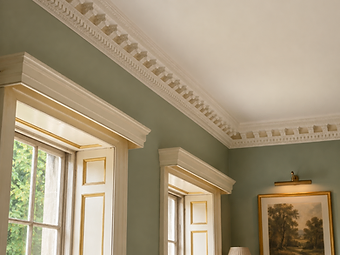
Lodgemore Mill is a former Georgian administration building in Stroud, Gloucestershire. Within the historic boardroom, years of water ingress had resulted in the progressive failure of the original decorative plaster ceiling. Large sections of moulded cornice and ornamental enrichments had become unstable, with some areas suffering complete loss.
Classic Plasterwork was commissioned to investigate the surviving plaster work and carry out the restoration, with the aim of retaining as much original fabric as possible while accurately reinstating those areas that had been lost.


02
Understanding the Existing Work
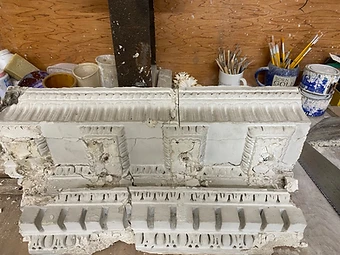
Before any repairs were undertaken, the surviving plaster work was carefully examined to establish the original profiles, enrichments and methods of construction.
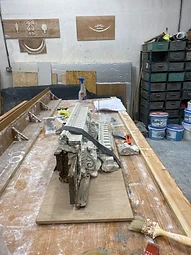
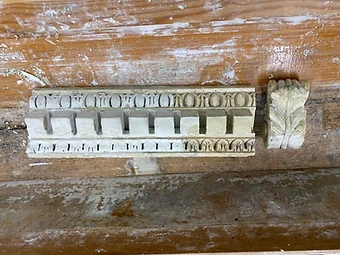
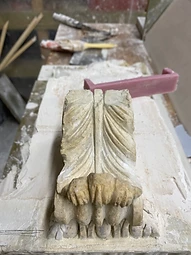
Where original details remained intact, squeezes and rubber silicone moulds were taken directly from the existing work. These became the basis for producing accurate reproductions, ensuring that new work reflected the character and craftsmanship of the original plasterers.
Every surviving fragment contributed to understanding how the ceiling had originally been formed.


03
The Restoration
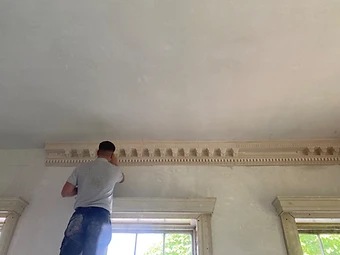
Loose and unstable plaster work was carefully removed only where necessary, with surviving original mouldings retained wherever possible.
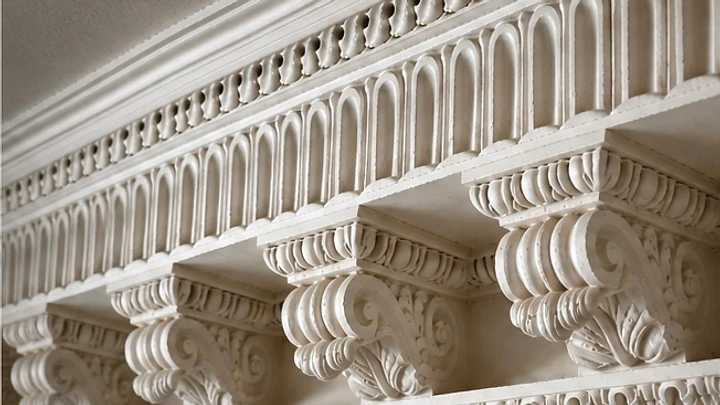
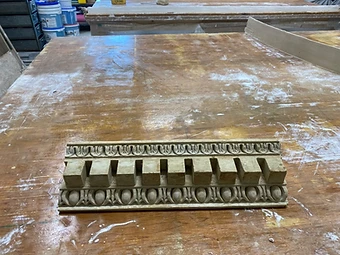
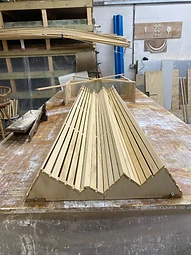
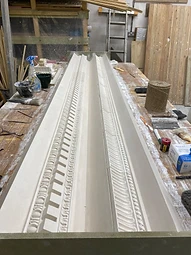
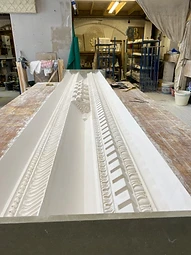
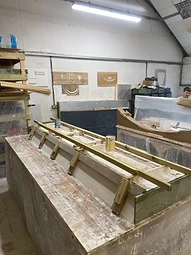
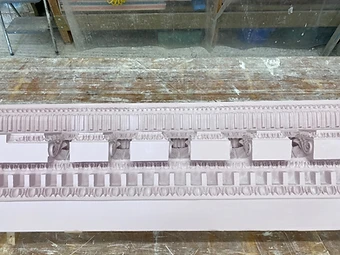
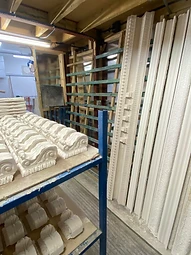
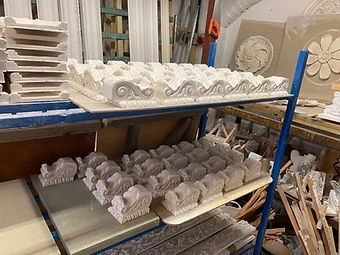
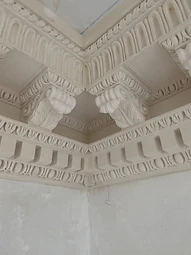
New enrichments were cast from moulds taken from the original work, while lengths of cornice were produced using traditional running moulds to match the surviving profiles. Each component was formed in plaster using traditional methods before being carefully installed and blended into the existing ceiling.
Throughout the work, the emphasis remained on retaining the character of the original ceiling rather than creating something new.










04
Traditional Craftsmanship
The project combined several traditional decorative plastering techniques, including the recording and assessment of surviving historic plaster work, taking squeezes from original enrichments, producing rubber silicone moulds, running traditional cornice profiles, casting ornamental enrichments in plaster, the careful reinstatement of decorative plaster work, and preparation for traditional distemper finishes.
Each stage was carried out with the intention of respecting the craftsmanship of the original ceiling while ensuring the repaired areas sat naturally within the wider scheme.
05
Reflections
Projects such as Lodgemore Mill demonstrate that even where significant losses have occurred, much can still be learnt from the surviving fabric.
Every moulding, enrichment and fragment provided information that guided the restoration. By working from what remained, rather than relying on interpretation, it was possible to reinstate the missing elements while preserving the character of the original boardroom.
For us, it was another reminder that careful observation is often the starting point for good conservation.