
Conservation & Restoration ·
College Lawns
Conservation of Decorative Cornices and Design of Bespoke Ceiling Roses
01
Background
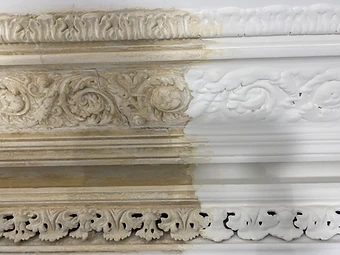
College Lawns is a Victorian residence in Cheltenham where the principal rooms retained their original decorative cornices beneath many layers of modern paint. While the cornices had survived largely intact, repeated decoration had softened the crispness of the enrichments and concealed areas of previous damage. The original ceiling roses, however, had been lost entirely.
The brief was to reveal and conserve the surviving decorative plaster work, undertake sympathetic repairs where required, and develop new ceiling roses that would restore the architectural balance of the rooms without creating a false sense of history.
02
Revealing the Original Craftsmanship
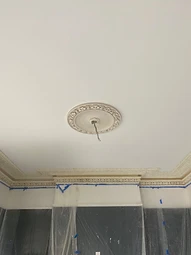
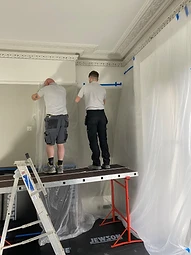
The project began with the careful protection of the surrounding fabric before work commenced. Surfaces were sheeted and taped back to allow controlled access to the cornices while keeping the rest of the room secure.
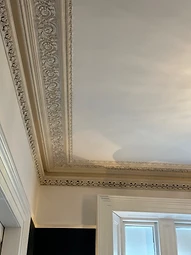
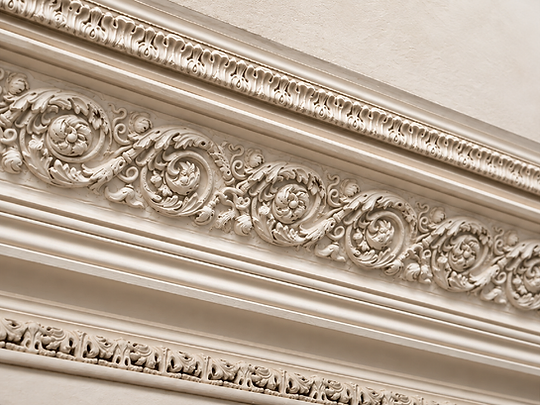
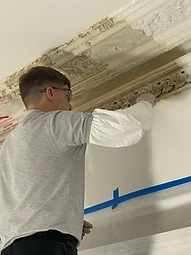
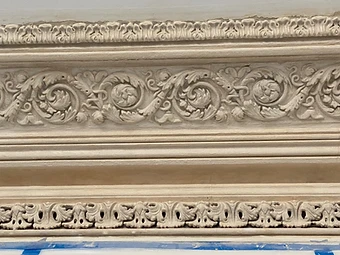
With the room protected, the accumulated paint layers were carefully removed to expose the original plaster work beneath. As the paint was stripped away, the quality of the Victorian modelling gradually re-emerged, revealing details that had been hidden for many years.
Only once the original work had been exposed could the true condition of the cornices be assessed and areas requiring repair accurately identified.



03
Conservation of the Cornices
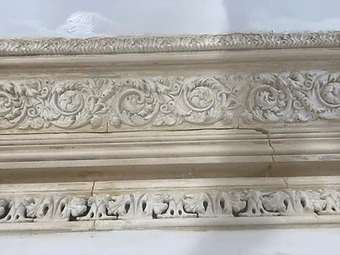
Once exposed, areas of damage that had been concealed beneath the paint became clear. Cracks, failed enrichments and earlier losses were recorded and assessed before any intervention was undertaken.
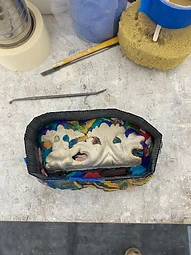
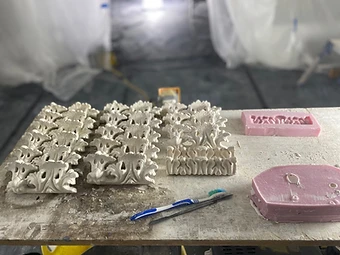
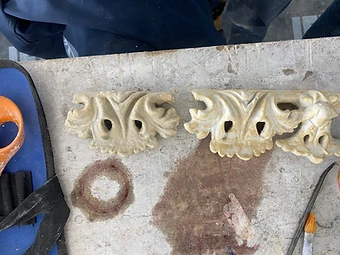
Damaged enrichments and areas of deterioration were repaired using traditional plaster techniques and compatible materials, retaining as much of the original fabric as possible. Moulds were taken from the surviving ornament so that replacement enrichments could be cast in plaster to match the original profiles.
The intention throughout was to conserve rather than replace, ensuring that the surviving nineteenth-century craftsmanship remained the defining feature of the rooms.





04
Designing the Missing Ceiling Roses
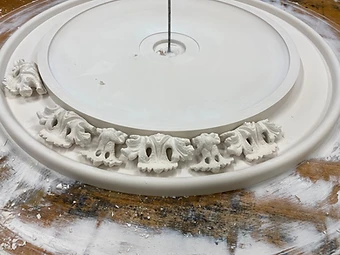
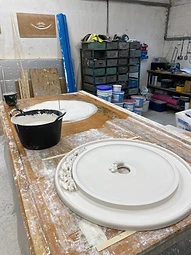
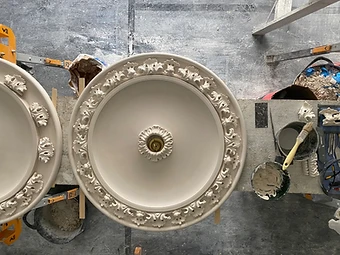
No original ceiling roses survived within the property. Rather than introducing an unrelated design or reproducing a feature without evidence, new ceiling roses were developed by studying the proportions, motifs and character of the existing cornices.
Elements of the original decorative ornament were incorporated into bespoke designs, allowing the new work to complement the surviving plaster work while remaining respectful of the building's architectural character.
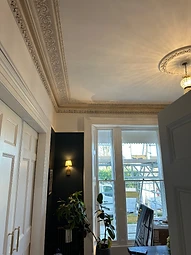
The result was a series of ceiling roses that felt entirely at home within the interiors, restoring a sense of completeness without competing with the historic fabric.



05
Outcome
The completed project transformed the decorative interiors by revealing the original Victorian craftsmanship and conserving what had survived. The carefully repaired cornices and bespoke ceiling roses now work together as a coherent decorative scheme, allowing the architectural character of the rooms to be appreciated once again.